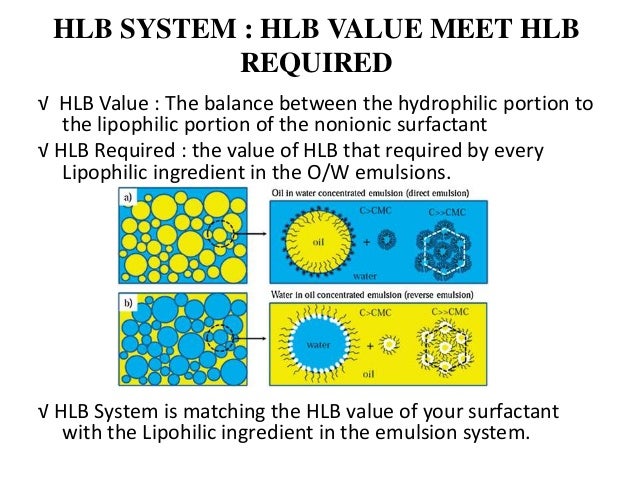
When water and oil are mixed together and vigorously shaken, a dispersion of oil droplets in water - and vice versa - is formed. When shaking stops, the phases start to separate. However, when an emulsifier is added to the system, the droplets remain dispersed, and a stable emulsion is obtained.
An emulsifier consists of a water-loving hydrophilic head and an oil-loving hydrophobic tail. The hydrophilic head is directed to the aqueous phase and the hydrophobic tail to the oil phase (see figure 1). The emulsifier positions itself at the oil/water or air/water interface and, by reducing the surface tension, has a stabilising effect on the emulsion.In simple terms an emulsifier is a compound that can blend oil and water together into a homogeneous mixture.
My favourite and most used emulsifier is ECOMulse

ECOMulse is a natural source, self-emulsifier for oil in water emulsions. It contains no ethoxylated ingredients. This system is based on acyl lactylates, which are conditioning to both hair and skin. The anionic lactylates are produced by a reaction between the acyl group of fatty acids and lactic acid. Lactic acid and fatty acids are natural moisturizing factor (NMF) constituents that are found in the skin. The lactylates are excellent viscosity enhancers, stabilizers, and conditioners. ECOMulse™ is a complete, balanced and highly desirable emulsification system. When used in lotions and creams, it will provide a soft, conditioned, talc-like feel to skin. Note, because this is based on anionic lactylates, it does not conform to the HLB system for non-ionic surfactants and no HLB number has been determined by the manufacturer. EcoMulse is manufactured using raw materials that are GMO-free.
It's a naturally derived compounds that fits the needs of most of my lotions and potions! It's fairly easy to work with. It's also often called Natramulse or Ritamulse, depending on the manufacturer.
For cationic emulsions I use SugarMulse or one of the popular BTMS formulas available.
Although the components sound long and complicated, they're natural and not at all harmful. You will often see a company claim that their products are 'chemical free' or 'free from chemicals'.
EVERYTHING IS A CHEMICAL. Anything with substance or components is a chemical. Water is a chemical compound! Don't trip and fall for fear mongering!